


September 24, 2025 Recording Latino history in the Tri-Cities
By Becky Kramer, Washington State Magazine
Ruben Lemos and his wife knocked on the door of an apartment building with a “for rent” sign when they were looking for a place in Pasco. The landlady turned the young couple away.
“She said, ‘I don’t rent to Hispanics. They are all drunks and drug dealers,’” said Lemos, recalling the incident from the late 1960s.
Her response didn’t sit well with Lemos, a Vietnam veteran, educator, and community volunteer who grew up in a migrant farmworker family from Texas. He filed a complaint with the city of Pasco, but says it was never resolved.
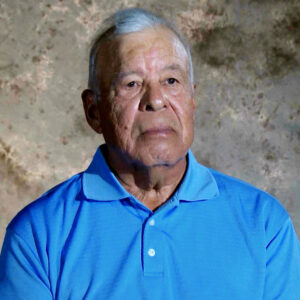
Ruben Lemos
Lemos’s story is part of a gathered by Washington State University Tri-Cities history faculty Robert Bauman and Robert Franklin. Latino settlement in the Tri-Cities is a part of Northwest history that hasn’t been well recorded, Bauman says. The stories capture the experiences of the fast-growing demographic in one of Washington’s rapidly expanding urban areas.
Crossing borders, finding work, becoming U.S. citizens, and striving for better lives through education are common themes in the oral histories. Lemos helped found the Hispanic Academic Achievers Program in 1990, which recognizes students in the Tri-Cities area and awards college scholarships.
Humanities Washington provided the initial grant for the oral histories, which were recorded at Northwest Public Broadcasting’s Îçҹ¾糡 studio. Besides giving community presentations, Bauman and Franklin use the stories in their classes on immigration and peoples of the United States.
It can be hard for first-generation Latino college students to see their families’ experiences as part of a larger, historical narrative, Franklin (’14 MA History) said. “These oral histories provide valuable representation. They see that their stories, and stories just like theirs, are important.”
Irrigated agriculture expanded across central Washington after World War II, increasing demand for workers in fields, orchards, and processing plants. Latinos have largely filled those roles, whether they were migrant laborers from Texas or the Southwest or more recently, Latin American immigrants.
Many Latinos settled in Pasco neighborhoods that were once segregated housing for Black and Asian American workers at the Hanford Nuclear Reservation. Îçҹ¾糡 57% of Pasco residents describe themselves as Hispanic or Latino, according to 2024 Census figures.
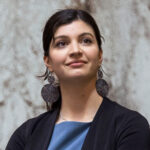
Sharlett Mena
Sharlett Mena, a Washington state legislator from Tacoma, grew up in Richland and Pasco. The daughter of Mexican immigrants, she recalled stark differences between her school experiences in the two communities.
During her Richland elementary school years, “I was the only kid on the basketball team who lived in an apartment,” Mena (’11 Comm., Phil.) said in her oral history. “I was the only kid whose parents had accents. My dad was a mechanic. He would come (to our games) in jeans. Other dads were in ties.”
When her family moved to Pasco, her school was predominantly Latino. But because of her time in Richland, Mena was placed in a mostly White classroom with a more advanced curriculum.
“My social peers were in a totally different wing of the school,” Mena said. “It felt like a difference you could see and feel throughout the Tri-Cities, especially between Pasco and Richland.”
Jerry Martinez described the Tri-Cities as place of opportunity for his family. His father fled El Salvador’s civil war and was working in California’s Central Valley when he heard about jobs in the Tri-Cities.
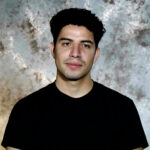
Jerry Martinez
“He found this beautiful area,” said Martinez (Finance ’20). “You could work year-round, save up money, and get yourself a nice little trailer or home.”
Martinez’s dad saved to bring his wife to the United States and later helped other family members immigrate. “The house I grew up in was at one point everyone’s home,” Martinez said. “Everyone who came from El Salvador spent some time in our family home in East Kennewick.”
Martinez, who works in philanthropy, credits his parents’ emphasis on education in his decision to go to college. A neighbor also played an influential role in their lives.
“An Army veteran who lived across the street was my parents’ biggest supporter. He took them to get their citizenship test,” Martinez said. “We call him grandpa. He has passed now, but he was a great man in our family.”
Bauman and Franklin hope to expand the collection of 15 oral histories. Additional funding has come from WSU’s David G. Pollart Center for Arts and Humanities and other sources.
“I think the Tri-Cities is a good place for immigrants,” said Ruben Peralta, who immigrated from Mexico as a teenager.
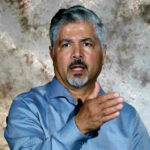
Ruben Peralta
With limited English skills, Peralta (’92 Ed.) struggled to finish high school while working at Oakdell Egg Farms to help support his family. Attending Columbia Basin College helped him catch up, and he later earned a teaching degree at WSU.
“Give people some time,” said Peralta, now a nonprofit administrator. “For the first 10 years, we’re working at the egg farm or in the fields, in the heat and the cold. But we move along, or our children do. When I run into my former students, they are business owners or real estate agents or school principals. I think we are thriving.”